Balewrap recycling, collected on farm.
Silage wrap, feed bags and drums can be some of the hardest waste to deal with on farm. PTS works with the Plasback On Farm Collection scheme to collect and bale agricultural plastics across the lower North Island for recycling.
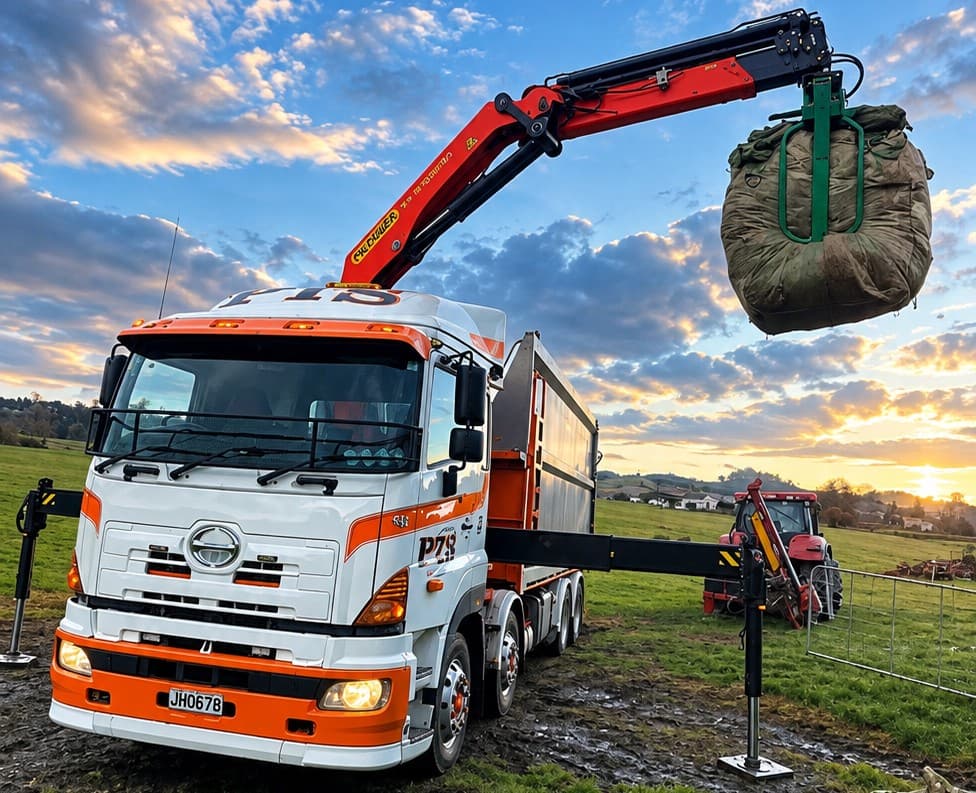
PTS works in partnership with the Plasback On Farm Collection scheme, collecting and baling agricultural plastic waste across the lower North Island.
Silage wrap, feed bags and plastic drums are part of everyday farming, but once they’ve done their job, they can be difficult to dispose of responsibly. Plasback gives farmers a straightforward way to keep these plastics out of general farm waste and have them collected for recycling.
Plasback was the first product stewardship scheme for agriculture to receive accreditation from the Ministry for the Environment.
How the scheme works.
Plasback operates a bin and liner system. The bin is a holder; the liner is what gets collected.
Plasback uses a bin and liner system to keep agricultural plastics contained and ready for collection.
Fill the liner with the appropriate plastic waste. Once it’s full, remove it from the bin, tie it off and get in touch to arrange collection.
You can also use Plasback liners without a bin. Either way, all plastic must be contained in a liner before PTS can collect it.
The scheme’s own collection line
Bins, liners and scheme details
Straight to the team running collections
Monday to Friday, 7am to 5pm
What you can recycle.
Four waste streams. They have to be kept separate from each other, in their own liners.
Silage wrap and film
Silage wrap, silage pit covers, small low density polyethylene (LDPE) feed bags, shrink wrap and pallet covers.
Woven bags
Polypropylene feed, seed and fertiliser bags.
Drums 1–60L
High density polyethylene (HDPE) drums. These must be triple rinsed.
Drums 100–200L
High density polyethylene (HDPE) drums. Exclusive to Ecolab and FIL.
Every collection is on farm
You do not need to cart anything to a depot. We come to you.
Keep the streams separate
All waste must be in a liner, with each waste stream kept in its own liner for collection.
Ready for a collection?
Got a full liner ready to go? Get in touch with the PTS team and we’ll arrange collection.
Arrange a collection